Interface Tweaks Quietly Shape Split-Second Choices on Mobile Card Platforms
Petra Russell · Jun 24, 2026
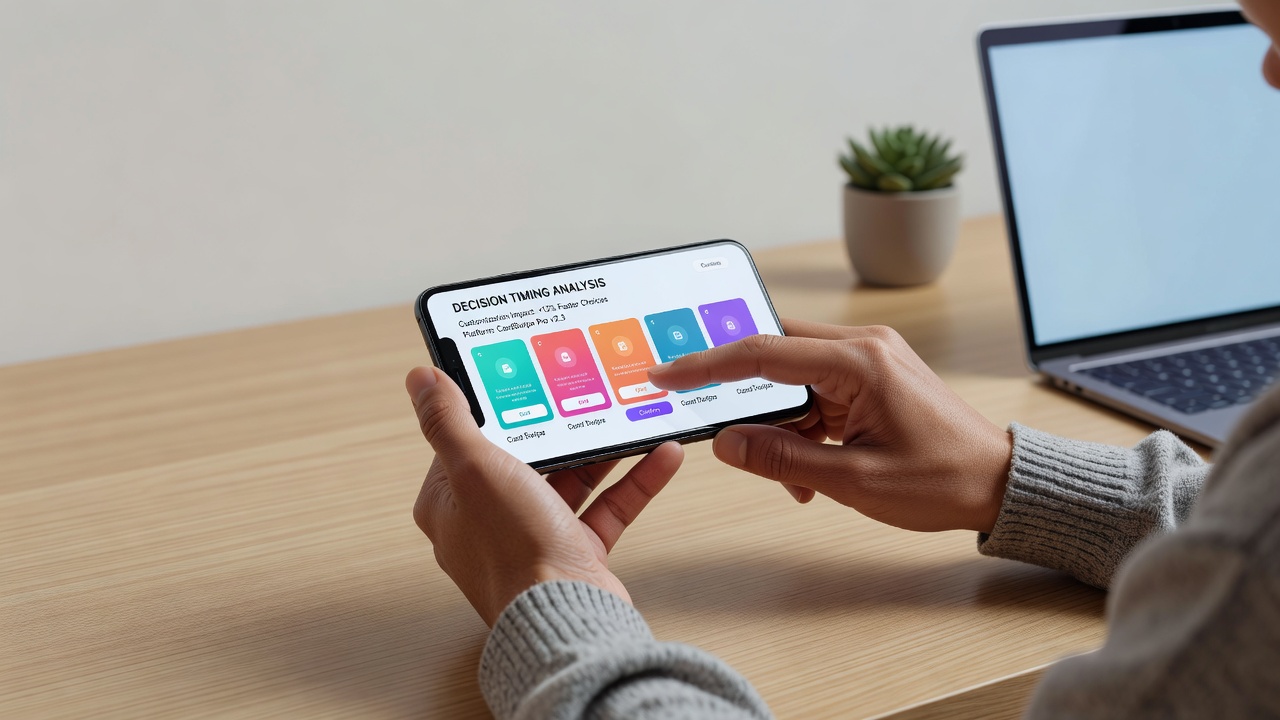
Interface Tweaks Quietly Shape Split-Second Choices on Mobile Card Platforms
Interface customization options on smartphone card platforms allow users to adjust layouts, colors, button placements, and animation speeds, and these changes can alter the time required to reach decisions during gameplay. Data from user interaction studies shows that small modifications in visual hierarchy and touch target sizing influence response intervals by measurable margins, especially in fast-paced card environments where timing matters. Observers note that players who rearrange elements often complete rounds with different pacing patterns compared to those using default setups.
Customization Features Common Across Platforms
Many mobile card applications now include sliders for card size, toggles for animation reduction, and color scheme selectors that users activate before or during sessions. These tools emerged as screen sizes varied widely across devices, and developers responded by giving players control over display density. Research indicates that when button spacing increases through customization, average decision intervals lengthen slightly because finger travel distance grows, whereas tighter layouts compress those same intervals. Studies conducted on touch accuracy further reveal that contrast adjustments reduce mis-taps, which indirectly trims wasted time from corrections.
Platform analytics from 2025 through early 2026 tracked thousands of sessions and found consistent patterns: users who customized font scaling to larger sizes spent extra moments reading updated information panels, yet they avoided re-reading errors that plague smaller defaults. Those adjustments prove particularly relevant on devices with high pixel density where default text can appear cramped.
Decision Timing Metrics and Measurement Approaches
Timing data gets captured through event logging that records the interval between card reveal and player action selection. Researchers at several human-computer interaction labs have applied these logs to compare default versus customized sessions, and the results show variance ranges from 120 to 450 milliseconds depending on the specific tweak applied. Eye-tracking equipment used in controlled tests demonstrates that customized contrast levels direct gaze more efficiently to key areas such as hand totals or bet prompts, which shortens the cognitive processing phase before a choice occurs.
Regional Data Points
Reports compiled by the Australian Communications and Media Authority highlight similar timing shifts in mobile entertainment apps, while Canadian digital media studies document parallel effects in card-based titles. European academic groups have contributed additional datasets showing that animation speed reductions, a popular customization, correlate with steadier decision rhythms across longer sessions. Figures reveal that platforms offering these options retain users who value predictable pacing, because the ability to dial back visual effects prevents fatigue from rapid screen changes.
Smartphone Hardware Variables at Play
Screen refresh rates, processor speeds, and touch sampling frequencies interact with customization choices in ways that affect perceived and actual timing. Higher refresh rate displays paired with reduced animation settings produce smoother transitions that some users report feeling faster, even when raw decision data remains stable. Observers note that older devices with lower sampling rates show greater sensitivity to button size changes, because larger targets compensate for slower touch registration and keep overall round times consistent.
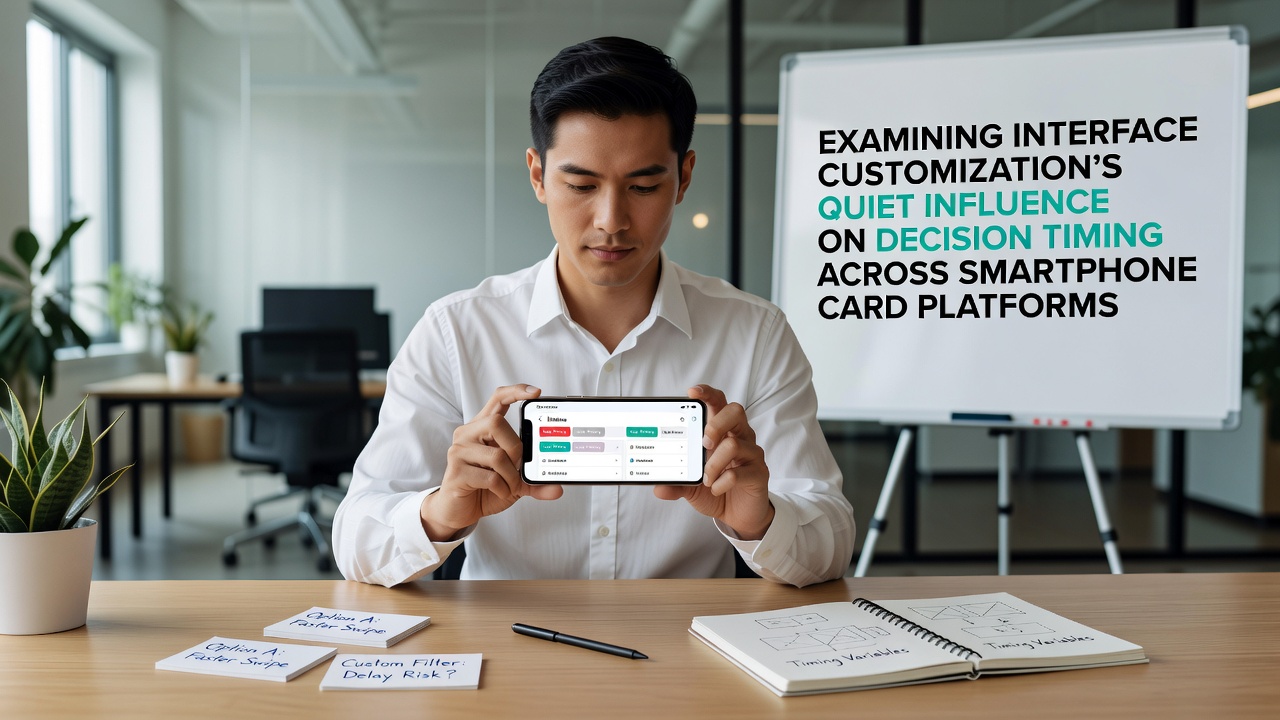
Operating system updates released in spring 2026 introduced new APIs that let applications query device performance characteristics and suggest preset customizations accordingly. Early adoption data suggests these automated recommendations help new users reach comfortable timing profiles without manual trial and error. Those who override the suggestions and experiment independently often discover combinations that further trim their personal decision windows by small but consistent amounts.
Behavioral Patterns Observed in June 2026
Session logs gathered during June 2026 indicate a rise in customization usage coinciding with new device launches that featured larger variable refresh rate screens. Players who enabled night-mode color shifts during evening hours showed slightly longer average decision intervals, yet they maintained accuracy rates comparable to daytime sessions. This pattern points to interface customization serving as a compensatory mechanism that balances environmental lighting conditions against the need for quick visual parsing.
Industry reports from the Interactive Games and Entertainment Association document that card platform operators began surfacing customization prompts earlier in onboarding flows, and completion rates for those prompts climbed steadily through the first half of the year. The resulting datasets allow developers to correlate specific setting combinations with aggregate timing statistics across geographic regions, revealing that button placement preferences differ notably between left- and right-handed user cohorts.
Future Implications for Platform Design
Design teams continue to refine customization granularity because timing data provides a quantifiable feedback loop. Academic papers published in 2026 emphasize the value of longitudinal tracking, since single-session measurements can miss how users adapt over repeated exposures and gradually optimize their personal configurations. Evidence suggests that platforms incorporating adaptive interfaces, which learn from individual timing patterns and propose refinements, achieve more stable decision intervals across diverse hardware.
Conclusion
Interface customization on smartphone card platforms exerts measurable effects on decision timing through adjustments in layout, contrast, animation, and target sizing. Data collected across multiple regions demonstrates these influences operate consistently, even as hardware and software environments evolve. Continued monitoring of user-selected settings alongside timing metrics offers developers concrete guidance for refining mobile experiences while preserving the core mechanics of card play.