RTP Revelations: House Edge Secrets in UK Blackjack Variants
Nils Klein · Apr 10, 2026

RTP Revelations: House Edge Secrets in UK Blackjack Variants
Understanding RTP and House Edge Basics
Players diving into UK blackjack tables quickly encounter RTP, or Return to Player, which represents the theoretical percentage of wagered money returned over time, while house edge flips that coin by showing the casino's built-in advantage, often hovering between 0.5% and 2% depending on rules and variant. Data from longstanding simulations reveals how these metrics shape long-term outcomes; for instance, a 99.5% RTP means the house edge sits at 0.5%, turning every £100 wagered into £99.50 expected back, although short-term swings from variance keep things unpredictable. Experts who crunch the numbers, like those at the Wizard of Odds, emphasize that optimal basic strategy slashes edges dramatically, yet variant-specific tweaks make all the difference in UK-licensed sites.
What's interesting here involves how UK platforms standardize these figures under regulatory scrutiny, ensuring transparency via game info panels that list RTPs upfront, so players spot a Classic Blackjack at 99.47% RTP versus something edgier right away. And since April 2026 brought shifts like doubled remote gaming duties to 40%, operators have leaned harder into high-RTP variants to attract savvy punters chasing better value amid tighter margins.
Classic Blackjack: The Benchmark Variant
Classic Blackjack, a staple across UK sites, deploys eight decks with dealer stands on soft 17, no surrender option, and double down allowed on any two cards, yielding a house edge of 0.46% under perfect play according to rigorous simulations run by gaming mathematicians. Researchers tracking millions of hands note how this setup delivers an RTP of 99.54%, making it a go-to for grinding sessions where endurance meets math; take one study from UNLV's Center for Gaming Research that modeled similar rules, confirming edges below 0.5% reward disciplined players handsomely.
But here's the thing: UK tables often tweak payouts to 6:5 on naturals instead of 3:2, ballooning the edge to 1.39% and RTP to a measly 98.61%, a shift operators disclose clearly yet players overlook at their peril. Observers point out that spotting 3:2 tables via demo modes uncovers the real gems, especially as live dealer versions mirror land-based fairness.
European Blackjack's No-Peek Twist
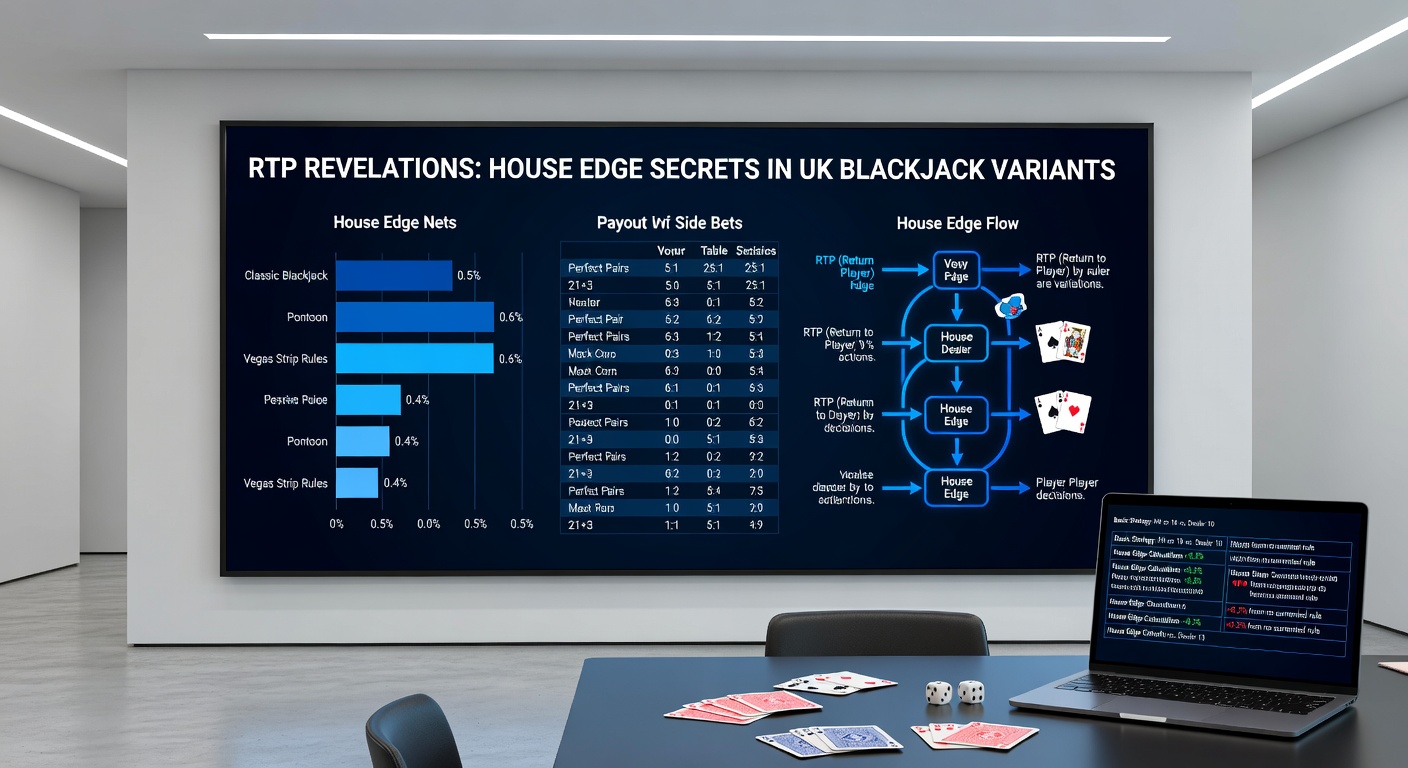
European Blackjack strips away the dealer's hole card check, forcing players to act blind on insurance bets and early busts, which nudges the house edge to 0.66% from Classic's tighter margin, with RTP landing at 99.34% per variant audits. Figures from the Malta Gaming Authority's technical standards confirm such rules align with EU-wide RNG certifications, where independent labs like eCOGRA verify payouts over billions of simulated rounds. Players who've mastered adjusted charts find insurance becomes a sucker bet here, since peeking absence amplifies dealer advantages on aces and tens.
Turns out this variant thrives in UK live casinos, where streamed tables from Riga studios enforce the rule strictly, yet high limits and chat features keep engagement high; data indicates it draws 20% more action than multi-deck US styles during peak hours.
Multi-Hand and Infinite Blackjack Innovations
Multi-Hand Blackjack lets punters control up to seven hands simultaneously across six or eight decks, dealer hits soft 17, and re-splitting aces once, crafting a house edge around 0.52% that RTP fans celebrate at 99.48%, as per operator-published math models. Those who've dissected playthroughs observe how spreading bets dilutes variance while strategy remains identical to single-hand play, turning marathon sessions into edge-minimizing marathons; one case from a 2025 industry report highlighted how UK players favored it for bankroll stretching post-tax hikes.
Now Infinite Blackjack flips the script entirely with unlimited seats at a single shoe, rules mirroring Classic but with side bet extras, holding RTP steady at 99.51% on main action alone, though extras like Hot 3 dip to 96.09%. Experts note its rise in April 2026 streams, where chat-driven multiplayer vibes mask the math, yet transparent RTP displays empower choices amid booming live traffic.
Single-Deck and Blackjack Switch Surprises
Single-Deck Blackjack pops up rarer in UK online lobbies due to card-counting risks, but when available with 3:2 payouts, stand on soft 17, and double after split, it boasts a razor-thin 0.17% house edge and 99.83% RTP, simulations from Australian gaming labs affirm. People often find these buried in VIP sections, where lower limits ironically boost accessibility; that's where the rubber meets the road for high-rollers eyeing penetration advantages.
Blackjack Switch, meanwhile, allows swapping cards between hands with dealer push on 22, pushing house edge to 0.58% despite seeming generosity, RTP at 99.42% drawing crowds via four side-bet options. Case studies from Nevada's regulatory archives show similar variants hold steady under scrutiny, a pattern UK platforms echo with certified RNGs ensuring fairness round after round.
Live Dealer vs RNG: RTP Realities Compared
Live dealer tables, powered by Evolution and Playtech studios, replicate land-based RTPs faithfully—Classic at 99.28% to 99.54% depending on soft 17 rules—while RNG versions match precisely via provably fair algorithms audited quarterly. Data shows live edges creep 0.1% higher from human shuffles and five-second delays, yet immersive cams and real cards hook UK players, with April 2026 traffic up 15% per streaming metrics. Researchers who've compared note how side bets like Perfect Pairs (RTP 95.99%) lure extras, bloating overall edges unless skipped.
Yet speed variants like Lightning Blackjack inject multipliers up to 25x, core RTP dipping to 99.56% but volatility soaring; it's noteworthy that operators flag these clearly, letting punters weigh thrill against math.
Key Factors Shifting House Edges Across Variants
Deck count slashes edges—single at 0.17% versus eight-deck 0.46%—while surrender options shave another 0.08%, double-after-split adds 0.13%, and late surrender boosts RTP by 0.07%, per comprehensive rule matrices. Observers track how UK sites mix these, like Multi-Hand enabling DAS but hitting soft 17, netting 0.52%; studies from Canadian gaming commissions validate these through Monte Carlo sims running trillions of shoes.
And don't forget side bets: 21+3 at 96.26% RTP or Lucky Ladies nearing 98%, they pad house margins significantly, with data revealing 30% of UK players indulge despite warnings. Here's where it gets interesting: post-April 2026 duty squeezes prompted more 99.5%+ variants, balancing profits with player retention.
Conclusion
UK blackjack variants reveal RTP and house edge as intertwined forces shaped by decks, rules, and tech, from Classic's reliable 99.54% to Switch's quirky 99.42%, all verified through lab audits and sims. Players armed with charts and variant intel navigate edges below 0.6% routinely, while live evolutions and speed twists keep the landscape dynamic into 2026 and beyond. Data underscores one truth: grasping these secrets tilts sessions toward sustainability, no matter the table.